
NGOs working for the rights of the survivors of the 1984 Bhopal gas disaster on Wednesday alleged that various governments in Madhya Pradesh and at the Centre have failed to bring the culprits of the world's biggest industrial tragedy to justice even after 37 years.

Former Union Carbide chief Warren Anderson, wanted in India in connection with the 1984 Bhopal gas tragedy which claimed over 3,000 lives in one of the world's most lethal industrial accidents, died in Florida, US. He was 92.

The Railway Men is a compelling watch; the subject is handled with seriousness and respect without going overboard with the dramatic impact, observes Mayur Sanap.

Madhya Pradesh chief minister Shivraj Singh Chauhan urged the government to boycott next year's London Olympics because of the event's sponsorship deal with Dow Chemical company, according to local media reports.
Even after the passage of 27 years, a consensus -- between the government and the non-government -- on the number of victims of Bhopal gas disaster is elusive.

Andhra Pradesh Chief Minister Y S Jagan Mohan Reddy announced an ex gratia payment of Rs 1 crore each to the kin of those killed in the incident.
With the June 7 Bhopal judgment, India has been reduced to a Fourth World country. This story of shame can only end if the government appeals against the judgment, gets proper criminal liability restored and seriously pursues the case against all the accused.
Dow Chemical Company is once bitten, twice shy. Close on the heels of its US parent's move to deny liability for damages resulting from the Bhopal gas tragedy at a plant run by Union Carbide (a company it had bought), Dow India has called off a greenfield project to establish a research & development facility in Maharashtra.
Former Union Carbide India chairman Keshub Mahindra and four others, who were convicted on June 7 in the Bhopal gas leak case, were on Tuesday granted bail by a local court. UCIL former managing director Vijay Gokhle, former vice president Kishore Kamdar, former works manager J Mukund and former production manager S P Choudhry were granted bail by Chief Judicial Magistrate R V Singh.
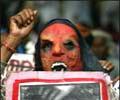
If the Bhopal judgment results in independent directors and CEOs/plant managers waking up to their responsibilities, that can only be a good thing.
The Campaign estimates that 22,000 people are already dead and says yet Dow wants to deny all responsibility and wants the Indian government to pay millions of dollars for the clean of its mess in Bhopal.
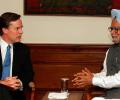
The India-US nuclear deal was aimed at ending India's nuclear isolation and nuclear apartheid, recalls Rup Narayan Das.
The Supreme Court on Monday pulled up the Centre for not being serious on disposal of toxic waste lying in the defunct Union Carbide India Ltd plant, now represented by DOW Chemical Company, in Bhopal for the last 28 years and asked it to take a final decision on it soon.
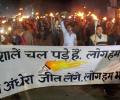
Families of the deceased and people who bore the brunt of the industrial disaster are now signing a petition, to be sent to the Supreme Court, requesting it to start hearing a curative petition of the government filed in December 2010 for more compensation.
The book, Advocacy After Bhopal: Environmentalism, Disaster, New Global Orders, brought the prize to Kim Fortun.
The judge dismissed their claim saying Union Carbide had sold all its shares in the plant and used the money to build a hospital in Bhopal.

Why the 2020 Padma Shri Awards are an honour truly worth celebrating.

This is how films that bring to life man-made industrial disasters should be made, says Prasanna D Zore.
Gas affected areas in Bhopal are still bereft of basic amenities.
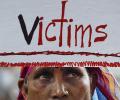
Amnesty International has called on the Dow Chemical Company to appear before a Bhopal court this week to explain why its subsidiary Union Carbide Company repeatedly ignored summons in the 1984 gas leak case.
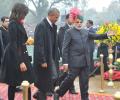
'Reviving the nuclear deal was crucial before the Obama visit... It was time for the BJP to admit that it was wrong, and redo the civil nuclear liability laws.'

... And it's not just fear of job losses, says Ajit Balakrishnan.

Deepak Kher was one of many volunteers who chipped in in the aftermath of the 1984 Bhopal gas tragedy which killed over thousands of people in one night, and damaged the future of many others. He recounts his experience on the tragic night and the days that followed.

Terming court's decision to summon Dow Chemicals in the Bhopal gas tragedy case as an "important step", Amnesty International today demanded that the company must acknowledge its responsibility towards the survivors of the 1984 industrial disaster.

The world had lost an opportunity to know long-term toxic effects of Methyl Isocyanate which had leaked from the Union Carbide factory on the night of December 2, 1984, because government research agencies have lost track of a bulk of survivors, says Dinesh C Sharma.

Although the credit for acquiring the technological skill must be given to India's outstanding nuclear scientists, the decision to go nuclear was a political one that entailed clarity of vision, courage and resolve, points out Rup Narayan Das.
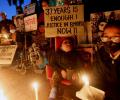
Thirty-seven years and some three generations later, the darkness of that night when 40 tonnes of lethal methyl isocyanate leaked out of the Union Carbide plant hangs like an impenetrable cloud over the lives of untold thousands, including children as young as three whose parents were exposed to the toxin when they themselves were children.

Looking at the most touching Hindi movies inspired by true-life events.

'Silencing citizens has become a major institutional process under this regime.' 'The anti-Indian argument is a bogey -- meant to silence independent thinking people in India and turn us into goats and sheep.'
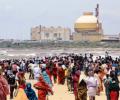
How on earth did Dr Manmohan Singh and his ministers conclude that the casualties of a disaster in a nuclear plant would be fewer than the deaths and injuries caused by the Bhopal gas tragedy? And that the compensation could, therefore, be capped at a smaller amount, asks T V R Shenoy.

This is the first time the fight is between mother and son. Both sides don't look in the mood to relent: Advisors and spin doctors have been hired, lawyers have been consulted.
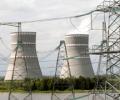
Under a 2010 nuclear liability law, nuclear equipment suppliers are liable for damages from an accident, which companies say is a sharp deviation from international norms

Meanwhile, Gandhi said Modi has betrayed the people, claiming that he had not fulfilled promises of providing two crore jobs every year and "depositing" Rs 15 lakh in their bank accounts.

Darryl D' Monte, the distinguished enviromental journalist, discusses how the media covers floods in Mumbai or Texas, but ignores Assam or Bangladesh.

Sofia Ashraf's video 'Kodaikanal Won't,' slamming Hindustan Unilever for alleged 'mercury poisoning,' has gone viral with over 25,000 online petitioners demanding that the multinational clean up the mess as well as compensate those who worked at its thermometer factory in Kodaikanal.
